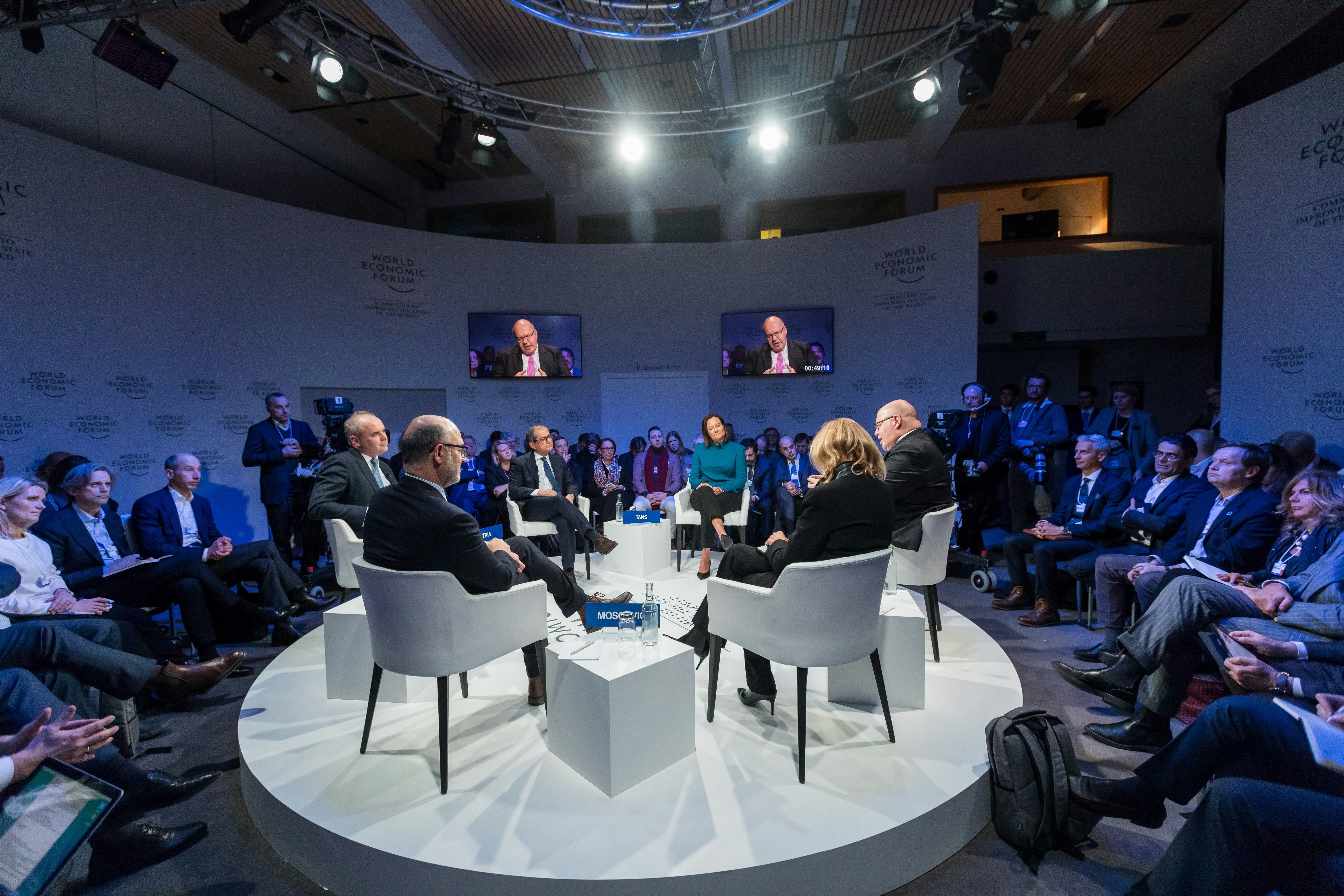

How to Manage Multi-Venue Events Without Losing Control
The Moment Multi-Venue Operations Gets Hard
Ask anyone who has managed live events across multiple venues simultaneously, and they will identify the same inflection point: the moment the complexity of coordination begins to outpace the capacity of the systems managing it.
It rarely happens all at once. It starts with a reporting export that doesn't match between systems. Then a check-in delay at one venue that ops doesn't catch until lines are already backing up. A staff member at a satellite location who doesn't have the right access credentials because the setup process was handled differently there. A revenue reconciliation that takes a full day after the event because payment data lives in three separate places.
According to Eventbrite's event statistics research, 71% of event organizers are optimistic about near-term growth — but managing the operational complexity of multi-venue programs remains the primary barrier that prevents that optimism from translating into scalable execution.
This article provides a practical operational framework for live event organizations managing two or more venues, covering the systems, workflows, and platform decisions that determine whether multi-venue growth creates compounding advantage or compounding problems. For a broader strategic overview, see the SquadUP Multi-Venue Event Operations Playbook.
|
See how multi-venue live event organizers use SquadUP to maintain operational control at scale. Request a personalized demo |
Why Multi-Venue Events Are Different — Not Just Bigger
A common miscalculation in live event operations planning is treating multi-venue events as simply larger versions of single-venue events. The assumption is that if you can manage one venue well, managing two or three is just a matter of multiplication — more staff, more tickets, more check-in hardware.
This framing misses the structural challenge of multi-venue operations. The issue is not volume. It is coordination architecture.
At a single venue, communication is direct. Operations leaders have physical proximity to every function. Staff can be redirected in real time. Problems are visible. At multiple venues, all of that proximity disappears. Communication becomes mediated. Decisions require information that has to travel from venue to operations center and back. Problems that would be immediately visible at a single venue can persist for an hour at a multi-venue event before anyone with decision-making authority learns about them.
Operationally, this creates several distinct challenges that don't exist at single-venue scale:
Coordination Lag
When staff at a satellite venue encounter a check-in anomaly, access credential issue, or payment processing problem, how quickly does that information reach the operations team and how quickly can a resolution be deployed? In fragmented operational environments, coordination lag between problem identification and resolution can span tens of minutes — long enough to create significant attendee experience incidents at high-traffic entry points.
Inconsistent Execution
Multi-venue live events require the same quality of execution at every location. Attendees who pay for the same event experience expect the same standard of service regardless of which venue they attend. When staff training, workflows, and tools differ by venue — which is the default outcome in fragmented operational environments — execution quality varies in ways that are directly visible to attendees.
According to Salesforce's State of the Connected Customer research, 80% of consumers say the experience a company provides is as important as its products and services — a standard that directly governs how attendees evaluate multi-venue live event quality.
Consolidated Reporting Failures
Revenue, attendance, and operational performance data that exists in separate systems per venue cannot be consolidated without manual effort. For organizations managing multiple events simultaneously, this means operational visibility is delayed, decisions are made with incomplete information, and post-event analysis requires significant administrative work that should not be necessary. See: The Role of Real-Time Data in Scalable Event Growth for a detailed analysis of how consolidated reporting changes operational outcomes.
Staff Utilization Inefficiency
Multi-venue live events typically require more staff than single-venue equivalents — but how much more depends almost entirely on how efficiently operations are structured. Fragmented systems that require separate setup, training, and manual coordination for each venue can double or triple staffing requirements relative to a unified operational approach. Organizations using mobile-first, standardized check-in workflows have demonstrated 30% staffing hour reductions versus traditional check-in setups.
The Five Control Levers of Multi-Venue Operations
Maintaining operational control across multiple live event venues requires deliberate management of five distinct operational dimensions. Organizations that build strength across all five create the infrastructure for consistent, scalable execution.
Control Lever 1: Unified Technology Platform
The foundational control lever. When ticketing, payments, check-in, attendee engagement, and reporting all operate within the same platform, data flows without interruption across the entire operational chain. Operations managers have a single source of truth for every venue. Staff tools are consistent regardless of location. Reporting is real-time and comprehensive.
The alternative — managing each venue on its own toolset or managing separate integrations between multiple tools — creates a fragmentation tax that compounds with every new venue added. Every additional system is a new data silo, a new training requirement, a new potential point of integration failure, and a new gap in consolidated reporting.
According to McKinsey & Company's research on data-driven organizations, the gap between enterprises that unify their data infrastructure and those that operate in fragmented environments consistently translates into measurable performance advantages — a pattern that applies directly to live event operational quality.
Control Lever 2: Standardized Staff Workflows
Operational control at multiple venues requires that staff at every location follow the same procedures, use the same tools, and work within the same operational framework. This is not simply a training challenge — it is a systems design requirement.
When the mobile check-in application, the credential management process, the access control workflow, and the escalation protocols are identical at every venue, training time decreases, error rates fall, and operations managers can shift staff between venues when needed without a learning curve. When those elements vary by venue, every venue becomes its own operational island — difficult to staff, difficult to supervise, and difficult to maintain quality across.
Control Lever 3: Real-Time Operational Visibility
The ability to see what is happening at every venue simultaneously — not in post-event reports, but in real time during the event — is a fundamental requirement of effective multi-venue operations management. This includes live attendance and check-in throughput data, real-time payment processing status, access control performance by entry point, and flagged operational anomalies that require attention.
Real-time visibility transforms the operations manager's role from reactive to proactive. Rather than learning about a check-in bottleneck after the fact, they can identify declining throughput at a specific entry point and deploy staff before a line develops.
Control Lever 4: Attendee Data Centralization
Multi-venue live event organizations that use third-party ticketing platforms for some events and owned platforms for others — or that manage attendee data in separate systems by venue — create a fragmented audience asset that is difficult to leverage for future marketing, loyalty development, or performance optimization.
According to Deloitte's 2024 Digital Media Trends research, even as consumers face cost pressures from rising live event prices, loyal fans continue to prioritize live experiences — making the organizer's ability to re-engage and retain that audience through owned data a direct revenue driver.
Centralized attendee data means that every ticket purchase, every check-in, and every engagement interaction across all venues flows into a single data environment that the organizer controls and can act on.
Control Lever 5: Proactive Communication Infrastructure
Multi-venue live events require communication infrastructure that keeps attendees, staff, and operations leadership aligned before, during, and after each event. When communication infrastructure is fragmented — different messaging tools for different venues, manual processes for staff coordination, post-event emails managed in separate lists by event — communication quality is inconsistent and labor-intensive.
Building Operational Control Across Multiple Venues: A Practical Framework
The following framework is designed for Event Operations Managers and COOs who are either preparing to expand to additional venues or are already managing multiple venues and facing the control challenges described above.
Phase 1: Infrastructure Audit
Before adding new venues or events, conduct a systematic audit of current operational infrastructure:
- Map every tool currently used in the operational stack — ticketing, payments, check-in, communications, reporting
- Identify every data handoff between tools and assess whether it is automated or manual
- Quantify the staff time spent on manual reconciliation, data transfer, and workarounds between systems
- Identify the reporting gaps that exist because data lives in separate systems
- Assess the consistency of staff workflows and tools across existing venues
Phase 2: Platform Consolidation Decision
With the infrastructure audit complete, the platform decision becomes clearer. The key evaluation criteria for a unified live event operations platform:
- Does it unify ticketing, payments, check-in, and reporting in a single system?
- Is it mobile-first for both staff workflows and attendee experiences?
- Does it provide real-time consolidated reporting across multiple venues?
- Is it white-label, ensuring brand consistency and attendee data ownership?
- Does it scale to the volume of events and venues you are planning for?
- Does the vendor provide dedicated implementation and live event support?
Phase 3: Workflow Standardization
Once a unified platform is selected, the operational work is developing and deploying standardized workflows:
- Define standard check-in procedures applicable to all venues
- Create staff training materials that are platform-based and venue-agnostic
- Establish reporting standards and dashboard configurations used consistently across all events
- Build communication templates and protocols for pre-, during-, and post-event attendee engagement
- Define escalation protocols that are consistent regardless of which venue an issue occurs at
Phase 4: Deployment and Iteration
Deploy the standardized infrastructure at the first new venue or across all existing venues simultaneously. Establish a systematic post-event review process that uses operational data to identify improvement opportunities and refine workflows before the next event.
For more detail on managing the risks of portfolio expansion, see: Avoiding Pitfalls When Expanding Your Event Portfolio.
|
Discover how SquadUP helps multi-venue live event organizers maintain control at every location. Schedule a demo |
What SquadUP Provides Multi-Venue Organizers
SquadUP's unified, white-label platform is designed specifically for the operational demands of multi-venue and large-scale live event programs. Key capabilities for multi-venue management:
- Mobile-first check-in consistent across every venue, with real-time throughput data for operations managers from a single dashboard
- Centralized ticketing management covering multiple events and venues simultaneously within a single organizer account
- Integrated payment processing with real-time status and consolidated revenue reporting across all venues
- Full attendee data ownership — every interaction at every venue captured in the organizer's data environment
- White-label technology ensuring brand consistency across all attendee touchpoints regardless of venue
- Dedicated client support available during live events for operational teams managing high-volume, time-critical situations
For organizations evaluating how to streamline staff operations specifically, see: How Automation and Mobile Check-In Enable Event Scale.
Key Takeaways
- Multi-venue events are structurally different from single-venue events — the coordination architecture creates complexity that volume management alone cannot resolve
- Five control levers — unified platform, standardized workflows, real-time visibility, centralized attendee data, and integrated communication — determine whether multi-venue operations scale with control or without it
- Infrastructure audits reveal the true cost of fragmentation, which is typically distributed invisibly across staff time and manual workarounds
- Platform decisions made early compound into operational advantages; those deferred create compounding fragmentation costs
|
See how SquadUP gives multi-venue live event organizations the operational control they need to scale confidently. Book a demo |
FAQs
Q1: What makes multi-venue event management more complex than single-venue events?
Multi-venue events introduce coordination architecture challenges — communication lag, inconsistent execution across locations, fragmented reporting, and staff management without physical proximity. The complexity scales with the number of venues and grows disproportionately when operational tools differ by location.
Q2: How do you maintain consistent attendee experiences across multiple venues?
Consistency requires standardized workflows, unified technology tools deployed identically at every venue, and a single platform that ensures staff at all locations follow the same procedures and provide the same quality of service.
Q3: What is the most important technology decision for multi-venue event organizers?
The platform architecture decision — whether to use a unified platform integrating ticketing, payments, check-in, and reporting in one system, or manage separate tools per venue. Unified architecture eliminates the fragmentation that creates the most significant operational and financial costs at scale.
Q4: How can event operations managers get real-time visibility across multiple venues?
Real-time visibility requires a unified platform with consolidated dashboards that aggregate data from all venues simultaneously. Fragmented tool stacks cannot deliver this, as data aggregation delays prevent genuinely real-time reporting.
Q5: How much does operational fragmentation cost live event organizations?
Fragmentation costs appear across staff time in manual reconciliation, reporting overhead, training duplication, coordination delays, and attendee experience incidents. The 30% staffing hour reduction demonstrated by organizations adopting mobile-first unified platforms suggests the scale of the efficiency opportunity.
Q6: What staff training approach works best for multi-venue live events?
Platform-based training that is venue-agnostic — staff learn a single system that works identically at every location — is far more efficient than venue-specific training. This reduces onboarding time, enables staff redeployment between venues without retraining, and ensures consistent execution.
Q7: How should live event organizers handle check-in at multiple venues simultaneously?
Mobile-first check-in tools that allow staff to process attendees from any device, with real-time throughput data visible to operations managers, provide the most scalable approach. Standardized mobile workflows eliminate hardware dependency and setup variability.
Q8: What is the role of white-label technology in multi-venue event operations?
White-label technology ensures every attendee experience — from ticket purchase to check-in to post-event communication — presents the organizer's brand, creating consistency that reinforces identity and ensures attendees associate their experience with the organizer rather than a third-party platform.
Q9: How do live event organizations scale to new venues without losing operational control?
By standardizing operational infrastructure before expansion — deploying the same platform, workflows, and training framework to every new venue from the start — treating new venues as deployments of existing infrastructure rather than new builds.
Q10: How does SquadUP help multi-venue live event organizers maintain control?
SquadUP provides a 100% white-label, mobile-first platform that unifies ticketing, payments, check-in, and reporting across all venues. Operations managers get real-time consolidated visibility across every location, staff use consistent tools regardless of venue, and the organizer retains full ownership of attendee data from all events.